Monday, April 23, 2018

Amazon’s Sumerian Is A Web-Based Development Service For VR/AR Apps


Amazon revealed its new Web-based AR and VR editor called Sumerian.

The new tool looks like it could be aiming to lure away developers from software like Unreal Engine and Unity which are used to make the majority of VR and AR apps currently available. Sumerian requires no downloading of software — it is entirely Web-based — and “customers pay only for the storage used for 3D assets and the volume of traffic generated to access the virtual scenes they create.”

Apps created in Sumerian are said to work in “any browser that supports WebGL or WebVR graphics rendering, including Daydream, HTC Vive, Oculus Rift, and iOS mobile devices.” Sumerian also takes a note from Unreal’s Blueprints interface, allowing creators with no coding experience to use a visual scripting tool to put together all the logic needed to make the world interactive.

The service includes a library of pre-built objects to use but according to Amazon you can also use assets from Sketchfab or Turbosquid. Google also recently launched Poly, its 3D object library. Poly combined with VR creation tools Tilt Brush and Blocks could let creators build objects and environments intuitively in VR and then use those creations in Sumerian.

Sumerian is also said to be integrated with Lex and Polly, two Amazon services “which provide automatic speech recognition (ASR), natural language understanding (NLU), and text-to-speech capabilities, so that Amazon Sumerian characters can understand and respond to users in lifelike conversations.”

Thursday, April 12, 2018


Lenovo Mirage Solo


Lenovo’s Mirage Solo is poised to send the mobile VR scene for a loop. First seen at CES 2018, it’s the first Google Daydream standalone headset to hit store shelves, meaning you don’t need a compatible smartphone to insert into it. All you need is the headset itself, which happens to be much more capable than what any phone can provide today.

In close collaboration with Google, the Mirage Solo features WorldSense, its six degrees-of-freedom technology that lets you move around in a virtual world as if you’re really there.

Essentially, there’s a flagship smartphone packed inside of the Mirage Solo. That, combined with inside-out positional tracking, not only makes Daydream apps and games that are available now even better, but it blasts away the gates that have previously kept mobile VR from being more interactive, like PC users currently enjoy with the HTC Vive.


The Mirage Solo is almost like the lovechild of the PSVR headset and the Google Daydream View, combining their sheer simplicity in design with impressive functionality that enhances the VR experience during marathon sessions. 
Given that all of the hardware is stuffed into the headset itself, the comfort yielded here is remarkable, but expected since PSVR employs a similar solution of front-loading the weight of the Mirage Solo on the top of your forehead.

A twisting knob brings the headset around your skull, making it fully adjustable – friendly even to those who wear glasses. On front of the headset, there are two cameras, which undoubtedly will be used to merge Google’s AR and VR aspirations.


Moving around the device, one side plays host to a power button and a microSD slot that’s handy for loading VR180 videos captured by the Lenovo Mirage Camera. Around to the other end, you have your volume controls and a 3.5mm headphone jack.


Loaded with the Snapdragon 835 processor, 4GB of RAM and Daydream OS, the Mirage Solo is ready to get down with the latest and greatest VR apps and games – even those that aren’t out just yet. The fact that it’s running on its own operating system without worrying itself about phone calls and what not in the background means that more resources can be dedicated to whatever it is you’re doing with Mirage Solo.

The visual fidelity provided by the wide 110-degree field of view of its 2,560 x 1,440 LCD display was immediately noticeable. Because it’s integrated into the device, pixels are almost indiscernible to the degree that you won't find yourself trying to readjust the headset to get a better look. The fact that the headset provides almost perfect isolation from light also plays into this gain in immersion.


Everything comes with a price, and the Mirage Solo is expected to come in under $400 (about £300, AU$500). A first look at the tag might shock you, but based on the powerful tech that’s been implemented and acknowledging just how well it’s been done, this seems like a sweet spot.


Tuesday, April 10, 2018


Training in Construction with VR Simulators


Everyone’s heard the term virtual reality, but despite the relatively relatable state of the art, for many it still conjures up images of science fiction. In “reality,” the technology is becoming increasingly prevalent in our day-to-day lives. One area where this is particularly true is in equipment training.
“Traditional, conventional training is somewhat flawed – and can be really boring,” says Jim Colvin, CEO of Serious Labs, which officially introduced its new simulator at the IPAF Summit in Miami in March. “Quite frankly, one reason people come into our industry is because they don’t like sitting in classrooms, they want to be physically engaged."

He continues, “The workforce is changing. There’s such a lack of skilled training in the world right now. How are we going to get through to young people about the workplace of the future unless we train them in the way they want to be trained? People learn by doing. It’s the best way to teach.”

A VR simulator is a completely immersive experience, Colvin explains. “You feel like you’re on an actual worksite, you can feel a visceral effect,” he says. “And it enables us to track everything the operator does. If you’re assessing someone from the ground and he’s up in a 150-foot lift, you don’t know where he’s looking. And how you judge compared to another instructor is not objective. A simulator is completely objective, however. It measures every way the operator leans, everywhere they look, how they do things and in what order.”

“What if you could put people into dangerous situations, and be able to track their behaviors in those situations, but not actually put them in danger?” asks Colvin. “I personally believe VR should be mandatory in aerial equipment training. It’s ludicrous to suggest a pilot would ever be able to get into a plane without getting enough seat time, and this is no different. The ‘just enough, just in time’ training philosophy doesn’t work.”

Brad Boehler, president of Skyjack, which assisted Serious Labs in the development of its new simulator, says virtual reality has great potential for aerial equipment training, but stops short of suggesting it can replace on-machine practical training entirely. “I’m not sure if in five years we’ll get to where VR will fully replace practical training, but for ongoing training purposes, if we can actually look at what the operator’s skill set is in an actual operating environment, and evaluate how they react in that environment, that’s pretty invaluable,” he says. “I envision that as the next step.”


Full Article

Thursday, March 8, 2018

Windows 10 Update Preview


Windows Developer Day


Learn what’s new for devs in the next update to Windows 10. Watch Microsoft CVP Kevin Gallo discuss new features and improvements.


Friday, February 9, 2018

Mixed Reality Headset, Professional Edition, Coming March


HP Windows Mixed Reality Headset, Professional Edition, Coming March


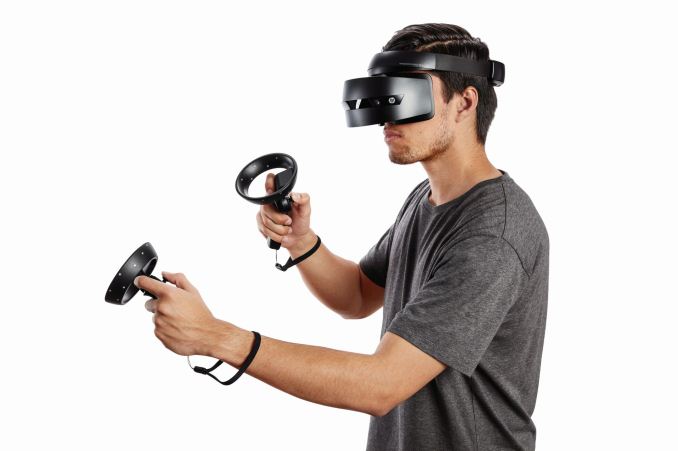
HP has added a second Windows Mixed Reality headset to its lineup, this one being dubbed the 'Professional Edition'. This headset, according to HP, is geared more towards a professional environment, and is said to be designed for longer sessions where users may need to jump out of the virtual world to tweak the environment or parameters and then jump back in.


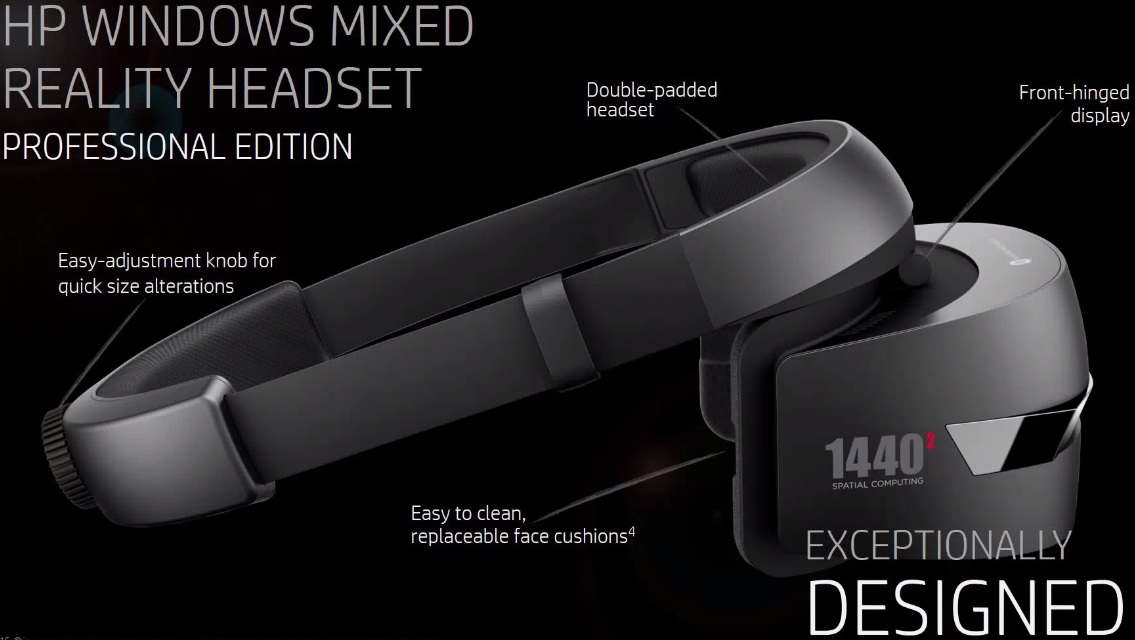
Removing the headset can be a bit of a cumbersome task especially when it is done frequently. In order to mitigate this common issue, the Professional Edition uses a double padded headset for comfort, as well as keeping a front hinged display feature. Flipping the headset up will allow users to easily go back and forth between reality and VR. Specific to the Professional Edition are the cushions, which are easier to clean and replaceable, helping out with hygiene when multiple people use the same device. 


Outside of the of the changes above, specifications wise the Professional Edition is no different than the non-PE edition. It uses dual 2.89-inch LCD screens at 1440x1440 resolution each (per eye), along with a 90Hz refresh rate. It also offers Windows Mixed Reality Ultra, with a 100° Field of View (from 90°), that allows for immersion within the environment. With the motion controllers, there are six degrees of freedom (6DoF) with no tracking boundaries for freedom of movement. The VR headset also includes integrated motion tracking which allows participants to jump right into Mixed Reality without setting up additional peripherals.


HP Windows Mixed Reality Headset - Professional Edition
ScreenDual LCD 2.89"diagonal
w/Pulse Backlight Technology
Resolution1440 x 1440 pixels per eye (2880 x 1440 combined)
Refresh Rate90 Hz (HMDI 2.0)
60 Hz (HDMI 1.4)
Field of View~100°, Fresnel-Asperical
Tracking2 x Front-facing cameras
SensorsWindows MR inside/out 6 DOF motion tracking
(Gyroscope, Accelerometer, and Magnetometer)
Interpupil Distance63mm +/- 8mm by eye tracking detection and software control
ConnectionsHDMI 2.0
USB 3.0
3.5mm jack
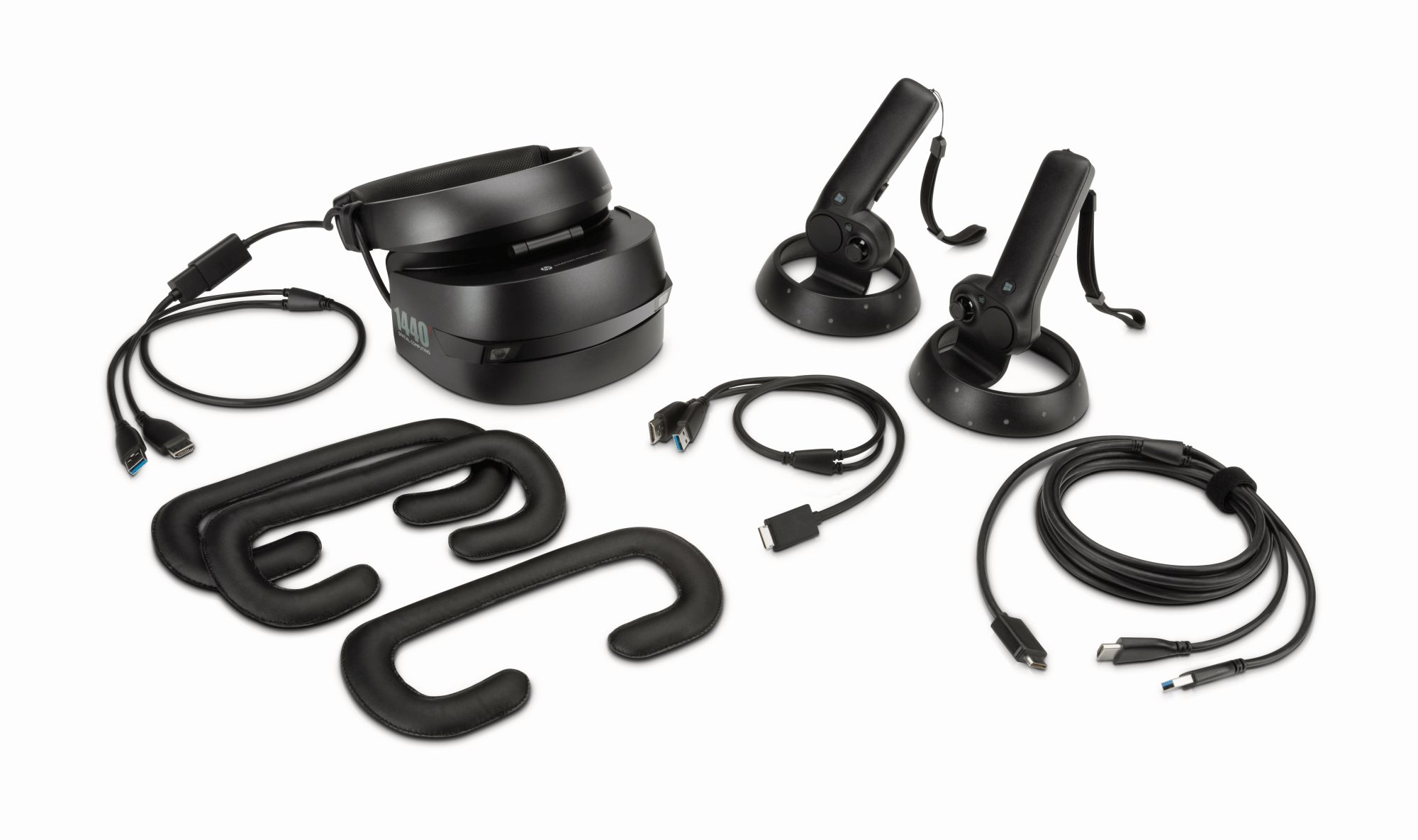
Cables1 x 3.6m 2-in-1 (HDMI 2.0 + USB 3.0)
1 x 0.6m 2-in-1 (HDMI 2.0 + USB 3.0)
Accessories3 x Polyurethane face cushions, cleanable, detachable


The HP Windows Mixed Reality Headset (Professional Edition) will be available in March for $449.

HP 'VR Launch Kit' to Aid VR Design


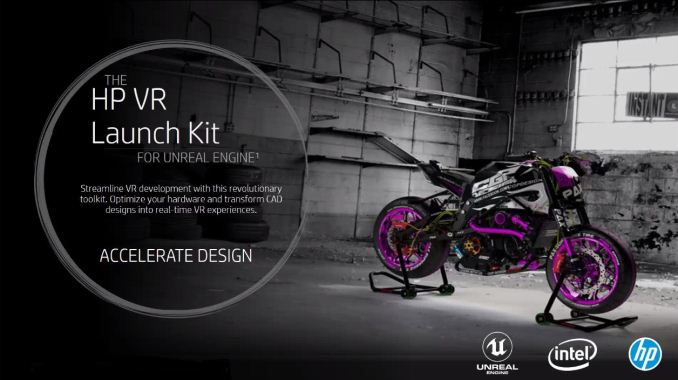
HP has also partnered with Epic in order to streamline VR development and accelerate design, particularly in product design and architecture. The goal of the downloadable launch kit is to provide an end to end solution to configure appropriate systems, as well as seamlessly receive 3D content out of CAD and into a VR experience both faster and with fewer issues. HP mentioned the VR Launch kit was designed to relieve two major pressure points: to streamline the process for seasoned VR users, and a simpler and faster way to get VR into the design visualization process for newcomers.


The Launch Kit will assess the hardware it is launched on, and give a VR performance profile so customers know what to expect out of their VR experience. This enables companies to determine the right computer configurations for VR deployment. It also includes a couple of templates to speed up workflows and real-time performance, including exploded view and cross-sectioning of models for quicker development. HP also includes two sample datasets: a motorcycle and an unbuilt Frank Lloyd Wright Trinity chapel.

The Launch Kit will also include Datasmith, previously announced by Unreal. Datasmith is a workflow toolkit for the Unreal Engine, developed to help designers and artists to simplify the process of importing data into the Unreal Engine. For example, taking a file from Autodesk 3ds Max and moving it into a virtual world and working it there. In essence, a CAD file is dumped into Datasmith and is converted into the Unreal Engine and worked on in a VR environment. Initially, there is support for over 20 software products including Maya, Cinema 4D, Moto Auto/Archi CAD, Solidworks, and others.

The HP VR Launch Kit will be available for download in Spring of 2018.

HP Launching 'Device as a Service' (DaaS) for VR


Many small or startup businesses simply do not have the capital for the latest and greatest hardware, but want to develop in VR. HP has developed its new 'Device as a Service (DaaS)' package that will defer that cost by providing the hardware, services, and support, all with a monthly payment instead of the large one time purchase. HP had DaaS is out already but today HP has added all of HP's commercial VR equipment, including the HP ZR backpack, to their DaaS services. The idea is that this can reduce the complex nature of purchasing as well as improve cost predictability by providing end-to-end lifecycle services, hardware support, and analytics designed to simply managing IT assets.

Pricing will vary dramatically depending on the device(s) as well as support plan chosen.

Friday, February 2, 2018

Dell announces partnership with AR headset-maker Meta to start selling its dev kit


Dell is about to start selling an augmented reality headset that seeks to rival Microsoft’s HoloLens.


The $1,495 augmented reality headset dev kit comes from the startup Meta and will soon be available for purchase on Dell’s website. It had previously only been available for order on Meta’s site. Interestingly, Dell detailed in a press release that they’ll be selling bundles that include the tethered headset and a PC, suggesting that this partnership is growing much deeper than a couple of demos and a spot on their online store.


Sales on Dell.com will begin February 15.


Meta has stayed awfully quiet on product developments as it continues to keep delivering a backlog of Meta 2 development kits that it first started taking pre-orders for the headset nearly two years ago; this partnership suggests most of these woes are behind it. The company has indeed lost some of its early mover’s advantage as the result of manufacturing challenges, even as its amassed more cash. It polished up a $50 million Series B this past June.


The Meta 2 headset’s wide field-of-view and tethered nature make it much more ideal for AR developers to visualize content without restrictions, but the Meta 2’s design also sort of punts some of augmented reality’s most significant hardware challenges down the field. In order to become an appealing consumer product, Meta will have to rethink quite a bit.


While the Y Combinator-backed startup’s competitors have been just as sluggish in some respects, the fact that fundraising juggernaut Magic Leap has managed to share what its product will actually look like while reports simultaneously emerge that Apple is hard at work on an AR headset for delivery in 2019/2020 shows that the field is definitely getting more crowded.


This partnership adds some very positive visibility to Meta, which has been very vocal on the ability of its headset to replace workstations, something Dell’s customers may prove interested in once the device exits the development phase.


Friday, January 26, 2018


Vectorform, Microsoft Partner to Expand HoloLens Technology to Automotive Design

Vectorform, a digital product and experiences company with expert capabilities in mixed reality design and engineering, today announced its collaboration with Microsoft to innovate vehicle design and prototyping processes for the automotive industry. Using Microsoft's HoloLens mixed reality headset, Vectorform and Microsoft enabled Ford Motor Company's designers and engineers to view 3D holographic versions of exterior body options (e.g. side mirrors, grilles) overlaid on top of the physical vehicle prototypes.


Microsoft's HoloLens Showcase team partnered with Vectorform on all design, content development, and engineering to build the mixed reality prototyping system. The companies collaborated for three months to create user experience flows, system requirements, user interfaces, 3D assets, and final engineering builds.This Vectorform solution accelerates the prototyping process by allowing designers to explore different shapes, sizes and textures of future vehicle attributes in minutes, instead of the weeks it can take to create clay models with physical tools. HoloLens also allows multiple team members to simultaneously view the same design variations, making collaboration easier and more productive.

"The ability to help Microsoft and its automotive clients see the potential impact of mixed reality in its design process is a huge win for Vectorform," said Jason Vazzano, CEO, and Co-Founder of Vectorform. "As we continue to work with Microsoft and HoloLens, we can't wait to see what other industry-transforming mixed reality solutions we will bring to market."

Vectorform is an official Microsoft HoloLens Agency Readiness Partner in both North America and Europe, and recently debuted HoloFramer, a mixed reality experience that allows interior designers and architects to create and collaborate on virtual layouts for physical spaces.


Continue Reading


Why Mixed Reality can be the key to transforming education


As technology continues to transform much of the world around us, some of the most exciting and innovative developments are being made in the education sector.

Companies are dedicating huge resources into cracking the lucrative education sector as school and universities look to enrich the learning experience with increasingly developed technology solutions and offerings.

Speaking to ITProPortal at the BETT 2018 show in London this week, Dan Ayoub, Microsoft GM of education for mixed reality, was keen to talk up the company’s increasingly powerful work in the education space, especially using its mixed reality tools such as Microsoft Hololens.

"Mixed reality devices have the capacity to completely transform education and give teachers these amazing tools to really help their students thrive and prepare themselves for the future," he said.

Microsoft recently revealed partnerships with a number of third parties to help make its mixed reality devices cheaper and more accessible, with a number of these products, from the likes of Lenovo and Dell on display at BETT 2018.


Ayoub agrees that getting devices such as Hololens out to schools and universities is key to expanding the potential of mixed reality, noting that it can completely transform the ways that children learn about the world around them.

"It's a fascinating space”, he says, “for us, it’s about, how do we arm teachers with the ways to educate and grow their students...it's just staggering, you could have students literally do anything!"


Continue Reading


This HoloLens App Hopes to Offer Paramedics an Augmented Reality Assist During Emergencies


A new telemedicine application for the Microsoft HoloLens is promising paramedics and EMTs a new tool for diagnosis and treatment of patients in the field.

Designed through a partnership between medical software company Exelus and HoloLens developer HoloForge, Nomadeec leverages the gesture-based commands of the HoloLens to give practitioners access to customizable modules for patient assessments, clinical exams, and patient profiles.


With Nomadeec, HoloLens can also act as a heads-up display for monitoring a patient's vital signs, as the platform can connect to numerous types of medical devices, such as ECGs, thermometers, stethoscopes, and ultrasound devices, via Bluetooth. And when practitioners need a second opinion from a medical professional, the Nomadeec system can connect them to those medical experts via video conference.

While Exelus and HoloForge emphasize Nomadeec's HoloLens capabilities, the platform is also compatible with smartphones, tablets, and smartglasses running on iOS, Android, or Windows.


Thursday, January 11, 2018


Has Microsoft Figured Out How to Double Field of View on HoloLens?


One of the most highly-cited drawbacks to the HoloLens is its limited field of view (FOV), but now it appears that Microsoft has solved that problem.

Based on patents filed in April with the World Intellectual Property Organization and discovered via MSPoweruser, the method involves splitting an image and projecting the two separate components then combining them.


The inventors, Microsoft optical engineers Tuomas Vallius and Jani Tervo, were able to achieve at least 70 degrees FOV, even if the individual components were only able to support 35 degrees (or the FOV of the current HoloLens).


Using embodiments described herein, a large FOV of at least 70 degrees, and potentially up to 90 degrees or even larger can be achieved by an optical waveguide that utilizes intermediate-components to provide pupil expansion, even where the intermediate-components individually can only support of FOV of about 35 degrees. Additionally, where only a portion of the total FOV is guided to disparate intermediate-components, a power savings of up to 50% can be achieved when compared to a situation where the FOV is not split by the input-coupler.— WIPO Patent No. WO/2017/180403

As is the case with most patents, there is no guarantee that this represents an actual design implementation that Microsoft intends to deploy, but this is encouraging news that indicates the next iteration of the HoloLens could include such an improvement.

HoloLens custom prescription lenses by Rochester Optical


If you own a HoloLens and wear glasses, you probably have a bit of difficulty while using the HoloLens. Now, thanks to a new insert from Rochester Optical, you can now get prescription lenses that you can use with your HoloLens very easily. It is worth mentioning that Rochester Optical previously offered prescription lenses for the Google Glass, too.

You can get the lens in three different types, and they cost up to $249. However, the price starts at $99 which is pretty good. To be specific, you can get the single vision lenses for $199 and the bifocals for $249.